Introduction to Marble Jesus Statues
Historical Context and Origins
The tradition of creating religious sculptures can be traced back to ancient civilizations, where representations of deities were common in temples and sacred spaces. The use of marble for statues became prominent during the Renaissance period, a time when artists sought to depict religious figures with greater realism and emotional depth. During this era, marble was favored for its durability and beauty, leading to the creation of iconic pieces that have influenced subsequent generations of artists.
Materials and Craftsmanship
The craftsmanship of marble Jesus statues is a meticulous process that combines artistry with skilled techniques. Marble, a metamorphic rock characterized by its fine grain and ability to take a high polish, is the preferred medium for these sculptures due to its aesthetic appeal and longevity. The selection of marble varies by region, with notable sources including Carrara in Italy and Pentelicus in Greece, each offering distinct color variations and qualities.
Crafters typically use chisels and other tools to carve intricate details into marble, a process that requires both patience and precision. Each statue is a labor of love, reflecting the artist’s vision and dedication to conveying the essence of Jesus. The finishing touches often involve polishing the surface to enhance the statue’s natural luster, allowing it to shine in places of worship.
Symbolism and Spiritual Importance
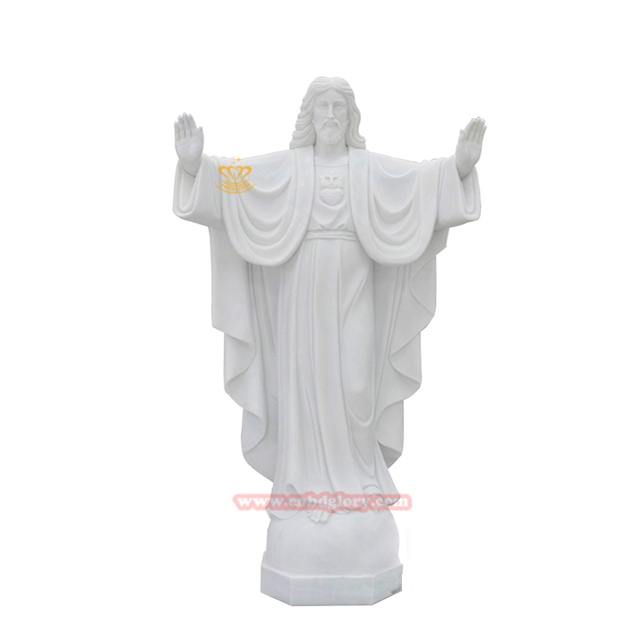
The symbolism of marble Jesus statues extends beyond their physical form; they embody themes of faith, sacrifice, and redemption. For many believers, these statues serve as reminders of Christ’s love and the central tenets of Christianity. When worshippers view a marble Jesus statue, it evokes feelings of reverence and inspires a deeper connection with their spirituality. The figure of Jesus, depicted in various poses such as compassion or exaltation, aims to communicate specific messages of hope and salvation.
Moreover, these statues encourage reflection and contemplation. In a world filled with distractions, worshippers can find solace in the presence of a marble Jesus statue, allowing them to pause and meditate on their faith. The serene countenance of Christ, often portrayed in a state of peace, invites individuals to engage in personal prayer or collective worship, fostering a sense of community and shared beliefs.
Placement of Marble Jesus Statues
Church Interiors
In many churches, marble Jesus statues are strategically placed within the interior to enhance the spiritual atmosphere. Common locations include altars, naves, and entrance halls, where they can be easily seen by congregants. Their placement often correlates with liturgical practices, guiding the focus of worshippers during services.
Chapel Settings
Chapel settings provide an intimate environment for prayer and reflection, making them ideal for marble Jesus statues. These smaller spaces allow for a more personal connection to the divine, and the presence of a statue can encourage deeper contemplation and worship. Chapels often feature statues that represent specific moments in Jesus’ life, offering opportunities for thematic reflection during services or private prayers.
Spiritual Gardens
Marble Jesus statues are also prevalent in spiritual gardens, where they serve as focal points for meditation and nature appreciation. These outdoor installations create serene spaces that invite individuals to connect with nature while engaging in spiritual practices. The combination of natural beauty and artistic representation fosters a tranquil atmosphere conducive to reflection and prayer.
Institutional Foyers
Many institutions, such as hospitals and schools, display marble Jesus statues in their foyers. These placements serve to inspire hope and comfort for visitors and staff alike. The visible presence of a statue can be a reminder of compassion and service, reinforcing the values of the institution while offering solace to those in need.
Artistry and Design
The artistry involved in creating marble Jesus statues is characterized by a delicate balance of aesthetics and solemnity. Artists must capture the essence of Christ through their design choices while ensuring that the statue resonates with the themes of devotion and spirituality. This balance is crucial, as the statue’s visual impact can influence the emotional experience of worshippers.
Various design techniques are utilized in marble sculpting, including realistic portrayal, stylization, and the incorporation of symbolic elements. The choice of pose, facial expression, and drapery all contribute to the narrative conveyed by the statue. Artists often draw upon historical references and religious texts to guide their interpretations, resulting in statues that are both beautiful and meaningful.
Conclusion
Marble Jesus statues hold a significant place within worship spaces, serving as powerful symbols of faith and artistic expression. Their historical roots, craftsmanship, and spiritual importance contribute to their enduring presence in churches, chapels, and gardens. The artistry involved in their creation reflects not only the skill of the sculptor but also the deep reverence held for the figure of Jesus in various cultural contexts.
As communities continue to embrace spiritual art, marble Jesus statues remain vital in fostering connections to faith. They invite reflection, inspire devotion, and enhance the worship experience for countless individuals seeking solace and guidance in their spiritual journeys.
FAQs
What is the significance of marble Jesus statues in worship spaces?
Marble Jesus statues symbolize faith, devotion, and spiritual reflection, enhancing the worship experience by providing a visual representation of Christ that invites contemplation and prayer.
How are marble Jesus statues made?
Marble Jesus statues are crafted from high-quality marble through a meticulous process involving chiseling and polishing, requiring both artistic skill and technical expertise.
Where are marble Jesus statues typically placed?
These statues can be found in various locations, including church interiors, chapels, spiritual gardens, and institutional foyers, each serving to enhance the spiritual atmosphere and encourage reflection.
What techniques are used in the design of marble Jesus statues?
Artists employ various design techniques, including realistic portrayal, symbolic elements, and stylization, to capture the essence of Jesus while ensuring the statue resonates with themes of devotion and spirituality.
Why are marble Jesus statues important to communities?
They serve as cultural and spiritual touchstones, reinforcing community values, encouraging personal reflection, and fostering a sense of unity among worshippers.
Related Products